Our Gregorian Life
“Time is but the stream I go a-fishing in. I drink at it; but while I drink I see the sandy bottom and detect how shallow it is. It’s thin current slides away, but eternity remains.” – Henry David Thoreau
We are slaves to the Gregorian calendar; introduced in 1582 by Pope Gregory XIII. Perhaps since 1582, we have gone to work, celebrated birthdays, taken our holidays, lived by the seven day week, and started the New Year every January 1st. We know the length of every month, what comes after Monday, and we have a leap year when it tells us. It segments time and as it marches on it follows the same pattern-2024, 2025, January, February, March, Monday, Tuesday, Wednesday, and on and on. Every minute of every day is counted as if it is a balance sheet or profit and loss statement. Our cell phones, email, social media,and electronic gadgetry adorn our bodies and souls like chains, binding us to our calendar lives. The latest and greatest technology only serves to throw us deeper into the Gregorian abyss. Slowly but surely, we lose our connection to the rhythms of nature.
“Adopt the pace of nature. Her secret is patience.” Ralph Waldo Emerson
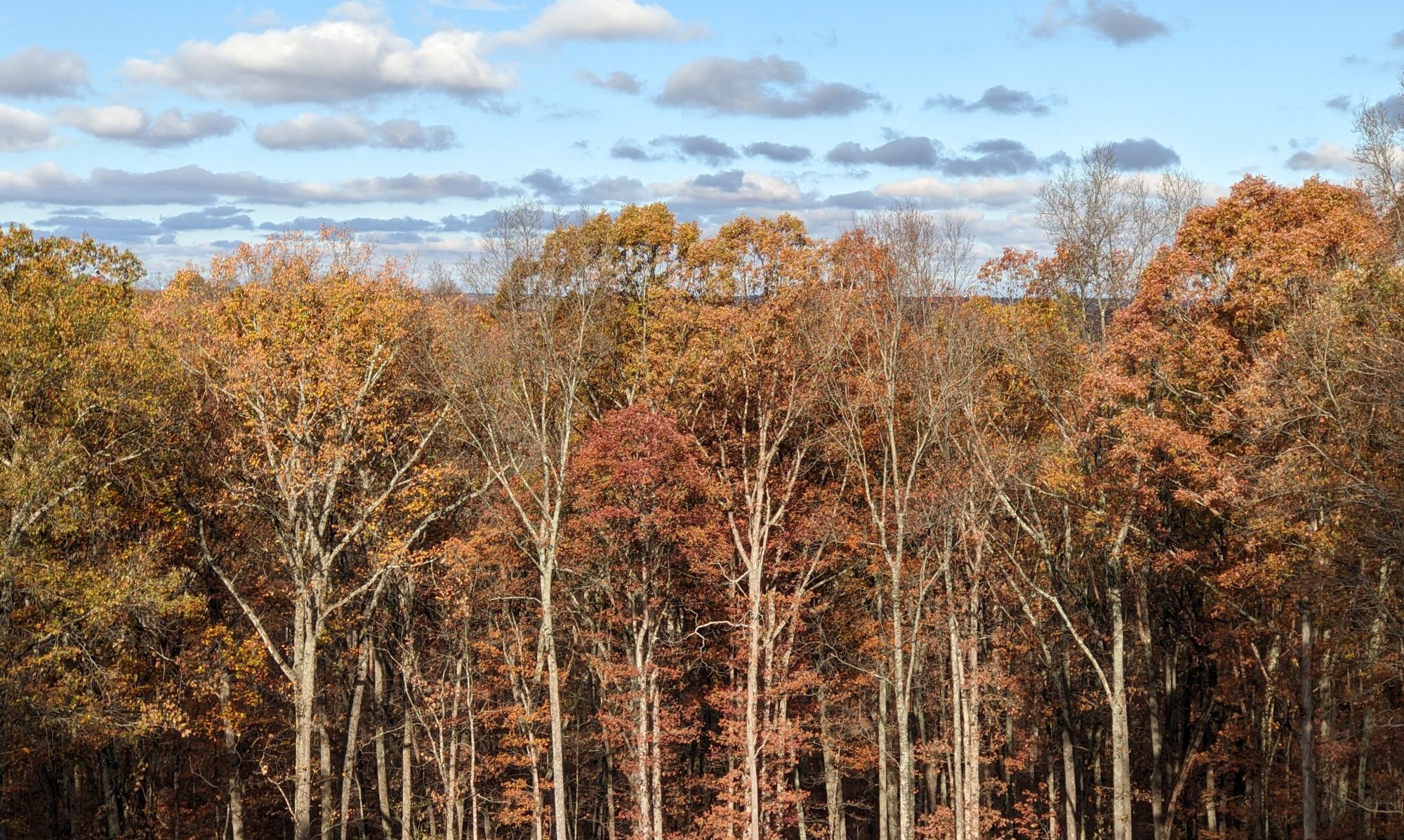
Instead of counting 12 months, 365 days, 8,760 hours, 525,600 minutes, or 31,536,000 seconds, we should pay more attention to nature’s calendar-the cycle of birth, growth, decline, and then rebirth. These cycles continue on, as they have for eons, oblivious to the Gregorian calendar. The plants know when to emerge in spring, the trees to bud, the birds to nest, the mammals to den up, the flowers to bloom, the leaves to fall, the wind to blow, the snow to fall, and the rain to come and go.
We march through life in a parallel system, one defined by man and the other by nature. More often than not, we want nature to adhere to our concept of time. Try as we might, we will not be successful. Nature marches to the beat of its own drum. Perhaps we will never be able to live fully to nature’s time until we throw away the calendar. In the interim, the more we pay attention to “natural time” the better connected we will be to the earth. Perhaps the Native Americans figured this out long before our ancestors stepped foot on this ground.
“Nature does not hurry, yet everything is accomplished.” – Lao Tzu
Time moves at a different pace when we use natural time. It compels us to slow down and become more observant of the subtle changes in our surroundings. I notice when the cardinals begin their annual mating call, when the ruby-throated hummingbirds arrive in spring, or when the dogwoods and redbuds bloom. Regardless of how successful I am at adhering to natural time, there is one moment in time when I will have no choice but to follow nature’s calendar…and the organizer of this meeting isn’t in the habit of sending out meeting notices.
“Time flies over us, but leaves its shadow behind.” Nathaniel Hawthorne

